


Porcelain Crowns (Caps)
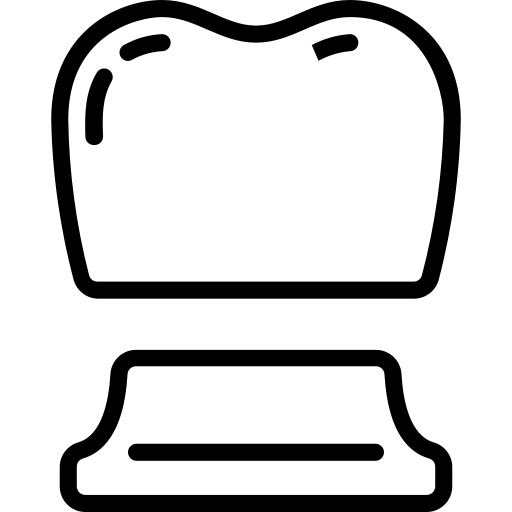
A crown (or cap) is a covering that encases the entire tooth surface restoring it to its original shape and size. A crown protects and strengthens tooth structure that cannot be restored with fillings or other types of restorations.
Although there are several types of crowns, porcelain (tooth colored crown) are the most popular, because they resemble your natural teeth. They are highly durable and will last many years, but like most dental restorations, they may eventually need to be replaced. Porcelain crowns are made to match the shape, size, and color or your teeth giving you a natural, long-lasting beautiful smile.
Reasons for crowns:
-
Broken or fractured teeth
-
Cosmetic enhancement
-
Decayed teeth
-
Fractured fillings
-
Large fillings
-
Tooth has a root canal
What does getting a crown involve?
A crown procedure usually requires two appointments. Your first appointment will include taking several highly accurate molds (or impressions) that will be used to create your custom crown. A mold will also be used to create a temporary crown which will stay on your tooth for approximately two weeks until your new crown is fabricated by a dental laboratory.
While the tooth is numb, the dentist will prepare the tooth by removing any decay and shaping the surface to properly fit the crown. Once these details are accomplished, your temporary crown will be placed with temporary cement and your bite will be checked to ensure you are biting properly.
At your second appointment your temporary crown will be removed, the tooth will be cleaned, and your new crown will be carefully placed to ensure the spacing and bite are accurate.
You will be given care instructions and encouraged to have regular dental visits to check your new crown.



FAQs
Can you get a crown without a root canal?
Yes, many patients can have a dental crown placed without the tooth needing root canal therapy. Dental crowns are commonly used to restore or improve the esthetics of damaged, worn, cracked, or weakened teeth while preserving the natural tooth structure underneath. Most teeth that have undergone root canal therapy require crowns for added protection, and strength but not every crowned tooth needs root canal treatment. At Oroville Gentle Dentistry, crowns are customized to strengthen your smile, improve appearance, and restore normal function.
What's the difference between porcelain and zirconia crowns?
Porcelain crowns are known for their natural appearance due to their translucency and lifelike appearance and are often used on front teeth. Zirconia crowns are stronger, more durable, but also more opaque and therefore less lifelike making them a popular option for back teeth. We are familiar with all kinds of crowns and can help you choose the best material based on your needs and smile goals.
Is it unusual for a crown to fall out?
We would like crowns to stay in place forever, and many do, however, if decay gets under the crown, the dental cement weakens or breaks down over time, or there is poor retention due to minimal remaining tooth structure, the crown can loosen or fall out. If this happens, contact your dentist as soon as possible. While waiting for your appointment, you can use a small amount of denture adhesive to help temporarily hold the crown in place until it can be professionally evaluated.
Can I still use mouthwash with a temporary crown?
Yes. Using mouthwash can help keep your gums and teeth healthy while wearing a temporary crown. Be careful when flossing and slide the floss out gently from the side to avoid loosening the temporary crown.
How long does a dental crown procedure take?
The length of a dental crown procedure depends largely on whether it is done in 2 shorter or one longer.
If done in 2 visits, which is the more traditional method, during the first appointment, the tooth is prepared and impressions are taken for the custom crown. A temporary crown is usually placed while the permanent crown is being made. At the second visit, the temporary crown is removed and the final crown is cemented securely into place.
At OGD we have the technology to offer same-day crowns using advanced digital and CAD-CAM technology. Once the tooth is prepared as in a 2 day traditional crown prep, you would simply wait in the chair. No need for a temporary. The Crown is made in the office. Once it is made, it will be cemented in place and you will go home with the final crown. No need for a temporary.
What problems can a dental crown fix?
Dental crowns can restore teeth that are cracked, severely worn, broken, weakened by decay, or root canal therapy. Crowns can also be used to improve the shape, size, strength, and appearance (including color) of teeth while protecting them from further damage.