


Porcelain Fixed Bridges
A dental bridge is a fixed (non-removable) appliance and is an excellent way to replace missing teeth.
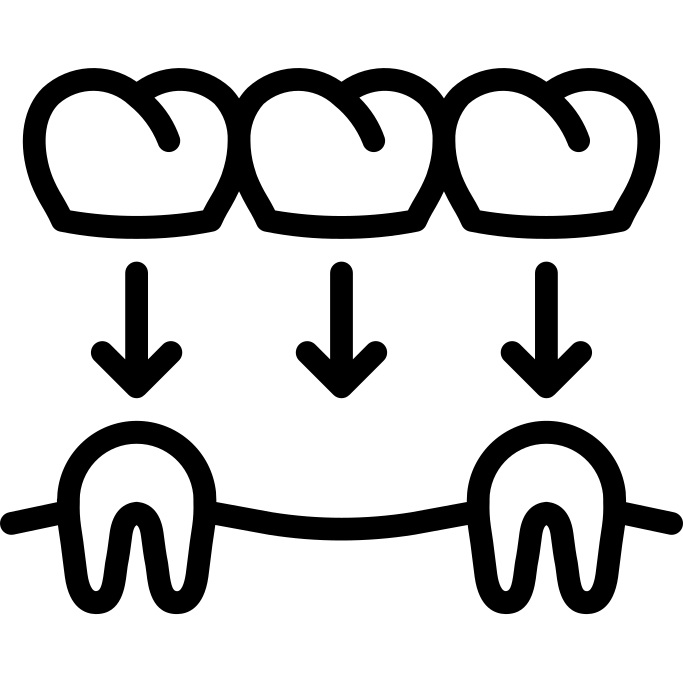
There are several types of bridges. You and your dentist will discuss the best options for your particular case. The “traditional bridge” is the most popular type and is usually made of porcelain fused to metal. Porcelain fixed bridges are most popular because they resemble your natural teeth. This type of bridge consists to two crowns that go over two anchoring teeth (abutment teeth) and are attached to pontics (artificial teeth), filling the gap created by one or more missing teeth.
Dental bridges are highly durable and will last many years, however they may need replacement or need to be re-cemented due to normal wear.
Reasons for a fixed bridge:
-
Fill space of missing teeth
-
Maintain facial shape
-
Prevent remaining teeth from drifting out of position
-
Restore chewing and speaking ability
-
Restore your smile
-
Upgrade from a removable partial denture to a permanent dental appliance
What does getting a fixed bridge involve?
Getting a bridge usually requires two or more visits. While the teeth are numb, the two anchoring teeth are prepared by removing a portion of enamel to allow for a crown. Next, a highly accurate impression (mold) is made which will be sent to a dental laboratory where the bridge will be fabricated. In addition, a temporary bridge will be made and worn for several weeks until your next appointment.
At the second visit, you permanent bridge will be carefully checked, adjusted, and cemented to achieve a proper fit. Occasionally your dentist may only temporarily cement the bridge, allowing your teeth and tissue time to get used to the new bridge. The new bridge will be permanently cemented at a later time.
You will receive care instructions at the conclusion of your treatment. Proper brushing, flossing and regular dental visits will aid in the life of your new permanent bridge.




FAQs
Is a dental bridge better than a dental implant?
It depends on your oral health and treatment goals. Dental implants replace a missing tooth without affecting nearby teeth (a one tooth solution for a one tooth problem), while bridges use neighboring teeth for support. A bridge may be a good option if the surrounding teeth already need crowns.
What happens if you do not replace a missing tooth?
Leaving a missing tooth untreated can lead to shifting teeth, bite problems, bone loss in the jaw, difficulty chewing, and increased wear on remaining teeth. Replacing missing teeth with a dental bridge or dental implant can help maintain proper oral health and smile function.
How long does a dental bridge last?
Dental bridges rarely fail ever, however the teeth on which bridges sit are still susceptible to decay and periodontal disease. Brushing, flossing, and regular dental visits help keep both the bridge and supporting teeth healthy.
What are the benefits of a dental bridge?
Dental bridges replace missing teeth thereby improving chewing, speaking, kissing (in the case of front teeth), prevent teeth from shifting, and restore the appearance of your smile. They are a reliable and long-lasting tooth replacement option.
Can you eat normally with a dental bridge?
Yes, after adjusting to your new dental bridge (many people bite their tongue or cheek until they get accustomed to having a tooth there again), you should be able to eat most foods comfortably again. Dental bridges help restore chewing function and improve bite stability. Avoiding excessively hard or sticky foods can help extend the life of your restoration.